
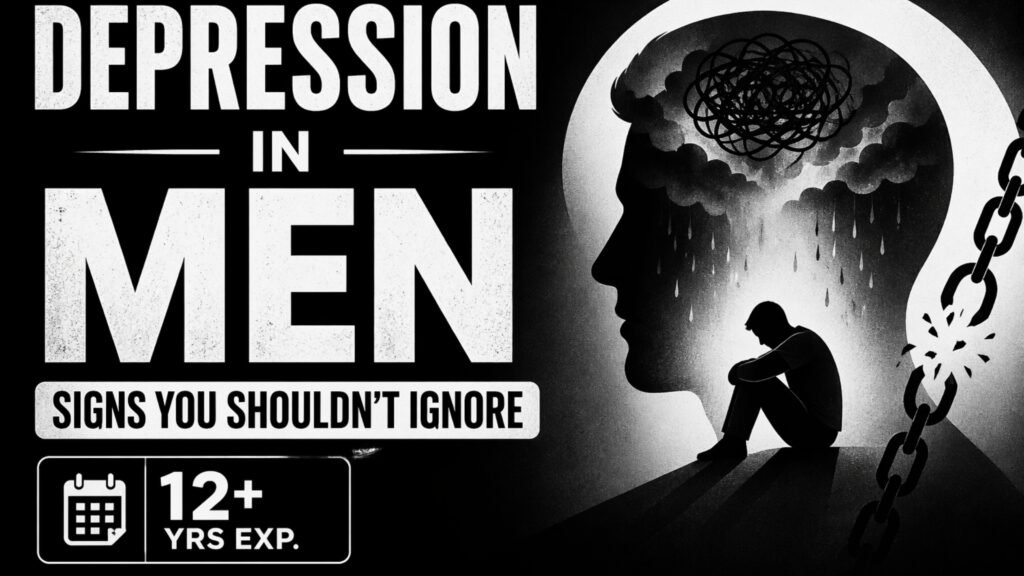

Depression does not always look the way people expect. Many imagine sadness or tears, but in reality, symptoms of depression in men often appear very differently.
You might notice anger, frustration, or even complete silence. These changes can feel confusing—for both the person experiencing them and their loved ones.
If something feels “off” but is hard to explain, understanding these patterns can be the first step toward clarity.
What is Depression?
Depression is a common mental health condition that affects your mood, thoughts, and daily functioning. It goes beyond temporary stress or feeling low for a few days.
It can impact how you sleep, work, interact with others, and even how you see yourself. While it affects both men and women, depression in men is often harder to recognize because it does not always show up as sadness.
Why Depression in Men Often Goes Unnoticed
Many men grow up hearing phrases like “stay strong” or “don’t show emotions.” Over time, this can make it difficult to express feelings openly.
Instead of talking about emotional pain, men may:
- Suppress their feelings
- Avoid discussing personal struggles
- Express distress through behavior rather than words
Because of this, male depression symptoms are sometimes misunderstood as personality changes rather than signs of a mental health concern.
Common Symptoms of Depression in Men
Recognizing early signs can help prevent things from becoming overwhelming. Some of the most common signs of depression in men include:
Emotional and Behavioral Changes
- Increased anger or irritability
- Emotional withdrawal or silence
- Loss of interest in hobbies or daily activities
- Feeling empty or disconnected
- Avoiding social interactions
Physical and Mental Symptoms
- Low energy or constant fatigue
- Changes in sleep patterns
- Difficulty focusing or making decisions
- Unexplained physical discomfort
Behavioral Warning Signs
- Increased use of alcohol or substances
- Risk-taking or impulsive behavior
- Sudden frustration over small issues
These are often hidden signs of depression in men, especially when they are mistaken for stress or work pressure.
Anger and Depression in Men: Understanding the Link
Anger is one of the most overlooked signs of depression.
When emotions like sadness or helplessness are difficult to express, they may come out as irritation or frustration. This is why anger and depression in men are often closely connected.
Recognizing this link helps shift the focus from blame to understanding.
Silence and Emotional Withdrawal: A Subtle Warning Sign
Not all men express distress outwardly. Some become quieter and more distant over time.
This may include:
- Reduced communication
- Spending more time alone
- Lack of emotional response
- Pulling away from relationships
This silence is not a lack of care. It is often a coping response when emotions feel overwhelming or difficult to process.
When Should You Consider Seeking Support?
It may be helpful to seek professional support if:
- Symptoms last longer than two weeks
- Anger or withdrawal affects relationships
- Daily life starts to feel difficult to manage
- There is a sense of emptiness or lack of motivation
Early support can make a meaningful difference and help prevent symptoms from worsening.
How Therapy Can Help
Working with a psychologist can provide a safe space to understand your thoughts and emotions without judgment.
Approaches like Cognitive Behavioral Therapy (CBT)—a structured method that helps identify and change negative thinking patterns—are commonly used to manage depression.
Therapy can help you:
- Understand emotional triggers
- Build healthier coping strategies
- Improve communication
- Regain a sense of control
About Ms. Neelam Mishra
Ms. Neelam Mishra is a Clinical Rehabilitation Psychologist based in New Delhi with over 12 years of experience in the field of mental health.
She is associated with Sir Ganga Ram Hospital, where she works with individuals dealing with conditions such as depression, anxiety, and other psychological concerns.
Her work focuses on:
- Evidence-based therapies like CBT and REBT
- Psychological assessments and counselling
- Supporting both individuals and families
Her clinical experience across hospital settings allows her to provide structured, practical, and patient-focused care.
Frequently Asked Questions
- What are early symptoms of depression in men to notice?
Early signs may include irritability, low energy, and loss of interest in daily activities. Some men may also become quieter or more withdrawn. These changes often develop gradually.
- Why do men express depression through anger instead of sadness?
Men may find it harder to express vulnerability due to social conditioning. As a result, emotional distress may appear as anger or frustration. This is a common pattern in depression in men.
- How can silence be a sign of depression in men?
Silence combined with withdrawal, low energy, or disinterest can indicate emotional struggle. It often reflects difficulty in expressing feelings rather than lack of concern.
- When should someone consider professional help for depression?
If symptoms persist for more than two weeks or affect daily life, professional support can be helpful. Early intervention often leads to better outcomes.
- Can therapy help manage male depression symptoms effectively?
Yes, therapy can help identify thought patterns and improve coping strategies. With consistent support, many individuals experience meaningful improvement.
Conclusion
The symptoms of depression in men are often subtle and misunderstood. Anger, silence, and withdrawal are not just behavioral changes—they can be important emotional signals.
Recognizing these patterns early can lead to better understanding, support, and care.
A Gentle Next Step
If you or someone close to you is experiencing these signs, speaking with a qualified psychologist can offer clarity and guidance tailored to your situation.
